Foundation Repair and Concrete Services in Sunnyvale, CA
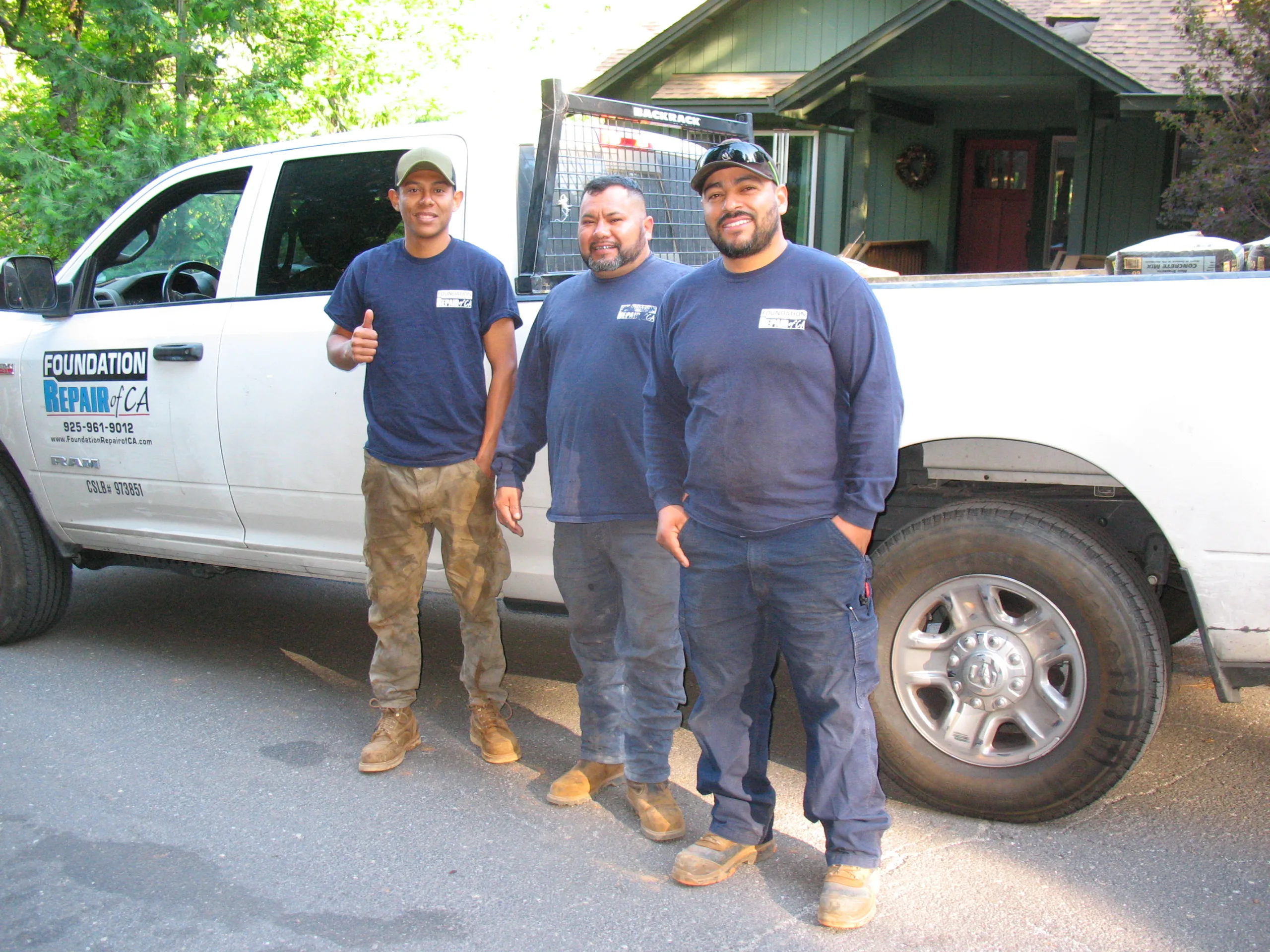
Foundation repair goes more smoothly when one person owns your project from the first inspection to the final walkthrough. At Foundation Repair of CA, a single point of contact manages your Sunnyvale project from start to finish, and the people under your house are trained, certified technicians we employ directly. You are never handed off to a subcontractor.
That accountability covers the parts most homeowners worry about:
- Engineering. Repair plans are designed and stamped by our engineering partners, so the plan you approve is the plan that gets built.
- Permits. We pull and manage permits and coordinate inspections with the City of Sunnyvale, which handles building permits through its One-Stop Permit Center at City Hall.
- Price. You receive a detailed estimate at the inspection and the exact price before any work begins.
- Follow-through. Warranties are written by product, transfer to a buyer at no charge, and are serviced by the same company that installed the work.
Whether your home is a mid-century single-story house on a slab or an older home over a crawl space, the process starts the same way: a full inspection that finds the cause before recommending a repair. We have been reading California soil, slope, and permitting conditions since 2012.
Warning Signs and What They Can Mean
Foundation and concrete problems usually show up as small changes you notice day to day. A sign on its own does not confirm a structural problem. The cause can only be determined at an inspection, and many cracks are not structural.
| What you notice | Possible causes | What the inspection checks |
|---|---|---|
| Cracks in drywall, especially at door and window corners | Differential settlement, seasonal soil movement, or normal framing shrinkage | Crack pattern and direction, floor elevations, and whether movement appears active |
| Doors that won’t fully close or windows that stick | Uneven settlement under part of the home, or sagging floor framing | Door and window frames, floor levels near the opening, and the support beneath it |
| Cracks in a slab floor or flooring that shifts | Soil movement under the slab, voids, or moisture below the floor | Crack width and offset, floor elevations, and drainage around the slab |
| Sloping or bouncy floors over a crawl space | Settled or failing posts, undersized beams, or moisture-damaged wood | Posts, beams, joists, footings, and signs of moisture |
| Musty odors, damp soil, or white mineral deposits in the crawl space | Groundwater, poor drainage, plumbing leaks, or open vents | Standing water, efflorescence, wood condition, and vents |
| Sunken patio, driveway, walkway, or garage floor | Soil settlement or erosion under the slab, or downspout runoff | Voids beneath the concrete, slope toward the house, and joint condition |
| Front porch pulling away from the house | Settlement of the porch slab, not necessarily the house foundation | Direction of movement and the condition of the joint |
| Cracks in the foundation wall | Settlement, moisture exposure, or age | Crack width and direction, concrete condition, and whether the wall has shifted |
Common Causes of Foundation Problems
Most foundation movement comes from changes in the soil and water around a home. These are the causes our consultants look for most often in South Bay homes:
- Expansive clay soil. Much of the Bay Area sits on clay that swells when wet and shrinks as it dries, which can push and pull on slabs and footings.
- Dry summers followed by heavy storms. Long dry stretches followed by a few days of heavy rain can raise groundwater quickly and send water toward the foundation.
- Surface drainage on flat lots. On level lots, water from downspouts and patios has fewer places to go. Grading that slopes toward the house and open concrete joints let it collect at the foundation.
- Soil settlement under exterior concrete. Patios, porches, and driveways often sit on soil that was never compacted to support them, and voids form as it settles or erodes.
- Plumbing leaks and tree roots. Both can soften or remove the soil supporting a slab or footing.
- Moisture in crawl spaces. In homes with crawl spaces, trapped moisture can contribute to soil movement and wear down posts and framing over time.
How Our Sunnyvale Inspection Works
- Book a time that works for you. The homeowner must be present. You do not need to clean or move furniture, but we need clear access to every room and the crawl space, if your home has one.
- We evaluate the whole foundation. Even if you called about one concern, your consultant evaluates the foundation and accessible crawl space and checks for movement, settlement, moisture, cracks, uneven floors, and supports. Exterior concrete inspections typically take 1 to 2 hours. A full home inspection usually takes 2 to 3 hours.
- You get a plain-language explanation. Your consultant explains what they found, the likely causes, the recommended repairs, and what could happen if an issue is left untreated. Cracks or uneven floors do not always mean a serious problem, and we will tell you when that is the case.
- You receive a detailed estimate. It lists the recommended repairs, the reasoning behind them, and the costs. You do not have to decide during the appointment.
- Your project manager takes it from there. If you move forward, you review and sign a contract. Your single point of contact then coordinates engineering, City of Sunnyvale permits, any additional measurements, and scheduling.
Repair Options Matched to What We Find
Every recommendation comes from the inspection. The same symptom can have different causes in a slab home and a crawl space home, so the repair has to match the cause.
Foundation Stabilization and Lifting
When soil under the foundation settles unevenly, galvanized push piers are driven to stable, load-bearing soil and the home’s weight is transferred onto them. Concentric push piers are used where vertical clearance is limited. A hydraulic lift connected to the piers can be used to attempt to restore floor elevations. Helical piers are used for lighter structures or where the soil is poor. These are engineered Foundation Supportworks® systems installed by our own crews.
Concrete Leveling and Repair
For sunken patios, driveways, walkways, porches, pool decks, and garage floors, PolyLevel® lifts concrete without tearing it out. A lightweight polyurethane foam is injected through small holes to fill voids and raise the slab. Most projects are completed in a few hours and ready for use the same day. NexusPro® sealant then closes cracks and joints to help keep water out from under the slab.
Crawl Space Support and Basement Moisture Control
In homes with a crawl space, SmartJack® steel support posts on reinforced footings restore support under sagging beams and joists. For moisture, encapsulation with a 20-mil CleanSpace® liner, drainage matting, a dehumidifier, and a sump system with an alarm controls dampness and odors at the source.
Stem Wall Repair
On homes with a raised perimeter foundation, the stem wall carries the weight of the house above the footing. Cracks can be sealed with epoxy injection and reinforced with CarbonArmor®, and damaged sections can be repaired, usually alongside moisture control so the cause is addressed too.
| Repair method | What it does | What it doesn’t do |
|---|---|---|
| Push piers | Transfer the home’s weight to stable soil and can be used to attempt a lift | Fix drainage or crawl space moisture |
| Helical piers | Support lighter structures or homes on poor soil | Replace the need for good drainage |
| SmartJack® supports | Restore support under sagging floor framing | Stabilize a settling perimeter foundation |
| PolyLevel® foam | Lift and stabilize sunken concrete slabs | Replace piers when the house foundation itself is settling |
| Crawl space encapsulation and dehumidifier | Control crawl space moisture and odors | Add structural support |
| Epoxy injection and CarbonArmor® | Seal and reinforce foundation wall cracks | Stop the movement that caused them |
| Sump system | Remove water that collects in the crawl space | Correct grading or downspouts outside |
Drainage Planning Protects Every Repair
A repair lasts longer when water is managed around it. We check where your downspouts discharge, whether the soil slopes toward the house, and whether concrete joints are sealed. These details also affect coverage: our concrete warranties require maintained grading, sealed joints, and downspout drainage. Extending downspouts away from the foundation and keeping joints sealed help protect the work.
Hands-On Expertise in Foundation Stabilization and Concrete Repair
These projects from our case study archive come from cities next to Sunnyvale. Each shows how the inspection tied a visible symptom to its cause.
Differential Settlement Repair in Santa Clara, CA
A Santa Clara homeowner’s doors would not fully close, and cracks had appeared in walls and door and window frames. The inspection found differential settlement caused by soil movement beneath the foundation. Our crew installed galvanized flat-land push piers with low-profile brackets and concentric push piers where clearance was tight, connected a hydraulic lift to attempt to restore floor elevations, and added SmartJack® 350 assemblies under the floor system. Foundation wall cracks were sealed with epoxy injection and reinforced with CarbonArmor®. Doors and windows aligned better afterward. Read the Santa Clara case study.
Crawl Space Moisture and Musty Odors in Cupertino, CA
In Cupertino, persistent crawl space moisture was sending musty odors into the living space, with efflorescence visible on the concrete. We installed a 20-mil CleanSpace® liner over drainage matting across the ground and foundation walls, wrapped the concrete pier posts, added the CleanSpace Wallie system up to 3 feet on the walls, a Sedona dehumidifier with a condensation pump, a SmartDrain Water Watch alarm, and SilverGlo™ insulated covers over the vents. The work reduced crawl space moisture and eliminated the musty odors. Read the Cupertino case study.
Sinking Patio Leveled in Mountain View, CA
A Mountain View homeowner’s back patio was sinking unevenly and cracking because of soil settlement under the slab, creating tripping hazards. Instead of tearing it out, we injected PolyLevel® through small holes to fill voids and lift the sunken sections, then sealed the cracks and joints with NexusPro®. The patio was level and usable again within a few hours, with no demolition. Read the Mountain View case study.
Why Sunnyvale Homeowners Choose Foundation Repair of CA
- One point of contact. A single project manager stays with your project from inspection to completion.
- Our own crews. Installations are done by trained, certified technicians we employ directly, never subcontractors.
- Engineered and permitted. Plans are designed and stamped by our engineering partners, and we pull permits and coordinate City inspections.
- Proven systems. We are a Foundation Supportworks® certified contractor with a BBB A+ rating, serving Sunnyvale from our San Jose regional office.
- Upfront pricing and financing. Through our lending partners, financing is available up to $250,000 with terms up to 30 years, and no credit score is required to get started.
What Affects the Cost of Foundation Repair
We do not publish citywide prices because every home is different. Your estimate is based on six factors, all explained at the inspection. Learn more about our upfront pricing.
- Extent of damage, from hairline cracks to active settlement
- Foundation type and soil, such as a slab versus a crawl space foundation
- Repair method, such as push piers, helical piers, or PolyLevel®
- Site access and lot terrain, including tight side yards, pools, and finished landscaping
- Permitting and engineering required by the City
- System and product selection, including the warranty that comes with it
Warranty Coverage by Product
Coverage depends on the system installed. Warranties transfer to a new owner at no charge when our office is notified within 60 days of the sale closing. See full details on our transferable warranties page.
| Product or system | Coverage |
|---|---|
| Push piers, helical piers, slab piers, and wall support systems | Up to the lifetime of the structure, depending on the system |
| PowerBrace™ wall repair | 25 years against further inward wall movement |
| SmartJack® supports, wall anchors, waterproofing, sump pumps, and dehumidifiers | 3 to 25 years, depending on the component |
| CleanSpace® vapor barrier liner | Up to 25 years against defect |
| PolyLevel®, NexusPro®, and related concrete repairs | Up to 5 years against re-settlement when maintenance conditions are met |
SmartJack® and sump systems require annual servicing to stay fully in effect. No warranty in our industry covers earthquake or seismic damage.
Ready to find out what’s behind the crack or the sticking door? Request service online to book your free inspection.

When it comes to protecting your home, you deserve a company that values honesty and results. Here’s what sets us apart:

Our team is highly trained and certified, using proven methods and industry-leading solutions you can trust.

We understand California soils, weather, and building challenges better than anyone.

Every project is completed by trained technicians using top-quality materials.

You’ll always receive clear communication, respect, and attention to detail.

Enjoy peace of mind knowing your investment is protected for years to come.

No surprises. You’ll know exactly what your project costs before any work begins.
Our customers trust us because we deliver consistent results and honest communication. Read reviews and see how homeowners across California describe their experience with Foundation Repair of CA.