Foundation Repair & Concrete Experts in Fremont, CA
Fremont homeowners don’t have to take our word for it: Foundation Repair of CA has documented foundation work here, from stabilizing and lifting a settling home with steel push piers to rebuilding a failing section of perimeter foundation for a new owner. Every repair plan is designed and stamped by our engineering partners, we pull and manage the permits, and the technicians who install your system are employees, not subcontractors.
Fremont came together in 1956 from five townships: Centerville, Niles, Irvington, Warm Springs, and Mission San Jose. That history means homes of very different ages and construction sit a few miles apart. We don’t assume a problem from your ZIP code. A Structural Consultant inspects your foundation, crawl space, and concrete, explains what is causing the cracks or sloping floors, and hands you a detailed estimate at the appointment.
You get one point of contact from inspection to final walkthrough, upfront pricing before work begins, and a transferable warranty matched to the system installed.
Warning Signs and What They Can Mean
Most foundation problems announce themselves inside the house first. The table below shows common signs, what can cause them, and what our inspection checks before recommending any repair. A sign on this list does not automatically mean you need structural work.
| What you notice | Possible causes | What the inspection checks |
|---|---|---|
| Diagonal cracks in drywall near door and window corners | Settlement under one part of the foundation; normal shrinkage | Crack pattern and width, floor elevations near the crack |
| Doors or windows that stick or won’t latch | Frame racking from uneven foundation movement | Frame alignment and floor levels in that room |
| Sloping, bouncy, or uneven floors | Settling footings, weakened crawl space posts or beams | Posts, beams, joists, and support spacing in the crawl space |
| Cracks in the foundation or stem wall | Settlement, deteriorated concrete, soil movement | Crack location, displacement, and condition of the concrete |
| Sunken or cracked driveway, walkway, or patio | Voids or washed-out soil under the slab | Slab movement, drainage paths, trip hazards |
| Damp or musty crawl space | Poor drainage, groundwater, missing vapor barrier | Standing water, moisture, wood condition |
If you’re searching for foundation crack repair near me or slab foundation repair near me, start with an inspection. It tells you whether a crack is cosmetic or structural before you spend anything on repairs.
Common Causes of Foundation Problems
Most movement comes down to soil, water, or aging materials. Soil conditions vary from lot to lot, so the inspection confirms which factor is at work at your home.
- Expansive clay soil. The USGS describes expansive soils as soils that swell when wet and shrink when dry, which can shift and crack structures built on them. California’s wet winters and long dry summers drive that cycle.
- Settlement of fill or weak soil. Footings can sink where soil was poorly compacted or softened by water.
- Drainage problems. Gutters, downspouts, and grading control how water moves through a property. Water that collects near the foundation can soften soil or reach the crawl space.
- Aging concrete and supports. Older perimeter foundations and crawl space posts can deteriorate over time.
- Seismic activity. USGS notes the Hayward Fault runs through Fremont. Earthquake damage is excluded from repair warranties industry-wide; seismic retrofitting is a separate service.
Not every crack signals a structural problem, and movement does not always worsen. A professional inspection separates normal wear from movement that needs a repair plan.
How Our Fremont Inspection Works
Your inspection ends with a written estimate in hand, and you decide on your own timeline.
- Schedule a visit. The homeowner needs to be present. No cleaning is needed, but clear access to each room and the crawl space helps.
- On-site evaluation. A Structural Consultant checks foundation cracks, floor levels, posts, beams, joists, moisture, and signs of settlement. If the crawl space is safe to enter, they go under the house. Both the foundation and crawl space are reviewed, even if you called about one issue.
- Findings explained. You hear what’s happening, the possible causes, and what could happen if it’s left alone.
- Estimate at the appointment. You get a detailed estimate before the consultant leaves. Exterior concrete visits usually take 1–2 hours; whole-home inspections usually take 2–3 hours.
- No pressure. No decision is required that day. If you move forward, next steps include the contract, permits, any additional measurements, and scheduling.
Repair Options Matched to What We Find
The repair follows the diagnosis. Your plan may use one system or combine several, and each is explained in your estimate.
Foundation Stabilization and Lifting
When footings have settled, we stabilize foundations with steel piers driven or screwed down to stable, load-bearing soil. Push piers use the weight of the structure for installation; helical piers suit lighter loads and softer soils. Where conditions allow, a hydraulic lift brings the foundation back toward level. This is the foundation leveling and foundation lifting work many Fremont homeowners search for.
Concrete Leveling and Repair
For sunken driveways, walkways, patios, and garage floors, we lift concrete using foam injection. PolyLevel® is injected through small holes, fills voids, and raises the slab. Most projects are done in a few hours and ready to use the same day. NexusPro® sealant then closes cracks and joints.
Crawl Space Support and Moisture Control
Common conditions under raised-floor homes include weakened posts, sagging beams, and damp soil. Adjustable SmartJack® supports on new footings can level floors, while vapor barriers, drainage, and dehumidifiers manage moisture.
Stem Wall Repair
When a section of perimeter foundation has deteriorated, we can shore the house, remove the damaged section, and pour a new reinforced footing and stem wall tied to new anchor bolts and mudsill.
| Repair | What it does | What it doesn’t do |
|---|---|---|
| Push or helical piers | Transfer load to stable soil; can lift toward level | Guarantee original elevation in every case |
| PolyLevel® foam | Lifts and stabilizes slabs, fills voids | Repair the house foundation itself |
| SmartJack® supports | Level and support sagging floors | Fix perimeter footing settlement |
| Vapor barrier and drainage | Control crawl space moisture | Replace structural support |
| Stem wall replacement | Restores a failed foundation section | Address settlement elsewhere |
Drainage Planning Protects Every Repair
Water management keeps repairs performing. Keep gutters clean, extend downspouts away from the house, and keep soil sloped away from the foundation. Where water collects, we can install sump pump systems with discharge lines that move water away from the home.
Hands-On Expertise in Foundation Stabilization and Concrete Repair
These two projects were completed in Fremont. Each started with an inspection and ended with a documented scope of work.
Foundation Stabilization and Concrete Replacement in Fremont, CA
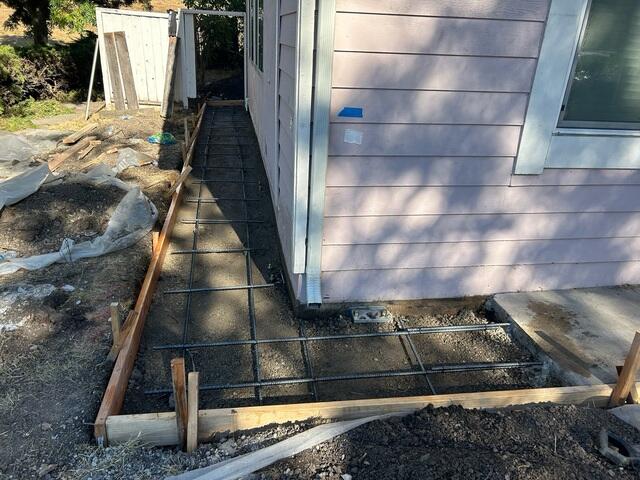
The homeowner saw interior wall cracks and doors and windows that stuck. Our team found foundation settlement and installed galvanized steel push piers to stable soil, then stabilized and lifted the home. Cracked concrete around the house was removed and a new path was poured. Afterward, the wall cracking stopped and doors and windows worked properly. Read the case study.
Perimeter Foundation Repair for a New Homeowner in Fremont, CA
A new owner ordered a real estate evaluation, which found a deteriorated, cracked section of perimeter foundation. The crew shored the home, removed and hauled away the damaged section, and formed a new 12″ x 8″ footing with an 8″ x 18″ stem wall reinforced with #4 rebar. A new mudsill was secured with anchor bolts, matching the existing foundation. Read the case study.
Why Fremont Homeowners Choose Foundation Repair of CA
Homeowners want straight answers, a realistic price, and a repair that lasts. Here’s how we deliver.
- Engineered plans: repair plans designed and stamped by our engineering partners.
- Permits handled: we pull and manage permits and coordinate inspections with the City of Fremont.
- Our own crews: trained, certified technicians we employ directly.
- Foundation Supportworks Certified, BBB A+ rated, licensed contractor #1159325, serving California since 2012.
- Financing: options through lending partners, subject to approval and restrictions.
What Affects the Cost of Foundation Repair
We don’t quote citywide prices because every home is different. Your estimate reflects:
- The extent of damage
- Foundation type and soil
- The repair method
- Site access and lot terrain
- Permitting and engineering needs
- The repair system and products chosen
See how our upfront pricing works.
Transferable Warranties by Product
| System | Coverage |
|---|---|
| Push, helical, and slab piers; wall support systems | Up to the lifetime of the structure, depending on system |
| PowerBrace® wall repair | 25 years against further inward movement |
| Crawl space and basement components (SmartJacks®, sump pumps, dehumidifiers, waterproofing) | 3–25 years, depending on component |
| CleanSpace® liner materials | Up to 25 years against defects |
| PolyLevel® and concrete crack repair | Up to 5 years, when maintenance conditions are met |
Warranties transfer to a new owner at no charge when we’re notified within 60 days of closing. Earthquake damage is not covered. Warranty details.

When it comes to protecting your home, you deserve a company that values honesty and results. Here’s what sets us apart:

Our team is highly trained and certified, using proven methods and industry-leading solutions you can trust.

We understand California soils, weather, and building challenges better than anyone.

Every project is completed by trained technicians using top-quality materials.

You’ll always receive clear communication, respect, and attention to detail.

Enjoy peace of mind knowing your investment is protected for years to come.

No surprises. You’ll know exactly what your project costs before any work begins.
Our customers trust us because we deliver consistent results and honest communication. Read reviews and see how homeowners across California describe their experience with Foundation Repair of CA.