A crack in the slab, a door that sticks, or a driveway that has dropped all raise the same question: is something moving, and does it need repair? Foundation Repair of CA provides foundation repair service in Fresno, CA that starts with an inspection. We evaluate your home’s foundation, any accessible crawl space, and the concrete slab and flatwork around it, then explain what we found and what we recommend.
We don’t assume a problem by ZIP code. For an older home in the Tower District, one of Fresno’s early streetcar suburbs, the inspection looks at how the original foundation was built and how later additions or past patches tie into it. Near Woodward Park or along the Blackstone Avenue corridor, we check the same fundamentals at every property: drainage and irrigation near the foundation, slab or crawl space condition, and any prior repairs.
In Old Fig Garden and Sunnyside, which are unincorporated Fresno County communities, the inspection is the same. If the repair needs a permit, we coordinate it with Fresno County rather than the City of Fresno.
Cracks and uneven floors can point to structural movement, but they don’t always mean a serious problem. Many have more than one possible cause, and the right repair depends on which one is actually at work. The table below shows what each sign can indicate and what we check before drawing a conclusion.
Only an on-site inspection can tell which cause applies to your home and whether repair is needed at all. Some conditWarning Signs and What They Can Meanions stay stable for years; others continue to move.
Common Causes of Foundation Problems
Most foundation problems trace back to soil, water, or how the home was built. Where expansive clay soil is present, it swells when wet and shrinks during drought, and repeated soil shrinkage and swelling can move a foundation unevenly. Other common causes include:
- Water: poor drainage, clogged gutters and downspouts, broken or missing drainage systems, improper grading, plumbing leaks beneath the foundation, and floods
- Soil: inadequate soil compaction during construction, inadequate soil properties, soil erosion, tree roots, and disturbing the soil during nearby digging or renovations
- Construction and age: poor initial construction, materials that aren’t durable enough, normal wear and tear, and foundation fatigue as a home ages
- Loads and events: renovations that add extra weight or change the structure usage, earthquakes, and extreme weather fluctuations
The lifespan of a foundation depends on how these factors combine at your property, which is why the inspection looks at the whole site, not just the crack.
How Our Fresno Inspection Works
A Structural Consultant visits your home, finds what is causing the symptoms you’ve noticed, and gives you a detailed estimate before leaving. Here’s what to expect.
- Schedule the visit. The homeowner needs to be present. We encourage anyone involved in the decision to attend so everyone hears the findings firsthand.
- Clear the way. There’s no need to clean. We just need access to every room, the crawl space, and the areas around the home.
- Full evaluation. We review the accessible foundation and crawl space, not only the area you called about. That includes cracks, floor levels, support posts, beams, joists, and signs of moisture or deterioration. If the crawl space is large enough to enter safely, we go underneath.
- Findings and options. Your consultant explains the likely cause, the repair we recommend, and why. You receive a detailed estimate at the appointment.
- Your decision. You don’t have to decide that day. If you move forward, we prepare a contract, then coordinate engineering, permits, and scheduling based on the project’s scope.
How long it takes: most exterior concrete inspections take 1–2 hours. A full home inspection usually takes 2–3 hours, depending on the home’s size, access, and your questions. See our Residential Appointment FAQs for more.
Repair Options Matched to What We Find
The right repair depends on the cause, the foundation type, and the site, so two Fresno homes with similar cracks can need very different work. These are the main approaches and where each one fits.
Foundation Stabilization and Lifting
When foundation settlement affects part of the house, we stabilize foundations by transferring the load to more stable soil. This foundation underpinning uses steel push piers, driven into place with hydraulic jacks, along with helical piers or slab piers for interior concrete slab sections. Stabilization is the goal: stop further settlement and the structural instability that comes with it. Some pier systems also allow foundation leveling, lifting a section back toward level, but whether lifting is appropriate, and how much, depends on the structure and is decided during design. On hillside lots or larger structural projects, an engineer may specify caissons or grade beams instead; your repair plan will say if that applies.
Concrete Leveling and Repair
Sunken driveways and sidewalks, patios, steps, and garage floors create trip hazards that lead to slips and falls, and they can often be lifted instead of replaced. With PolyLevel®, we drill small ports, inject expanding polyurethane foam to fill voids and raise the slab, then patch the holes. Crack repair and joint sealing use products such as NexusPro® or SealBoss; depending on the crack, that can mean polymer or epoxy injections. Patched areas won’t match the original concrete’s color or finish.
Crawl Space Support and Moisture Control
In a pier and beam foundation, sagging floors over crawl spaces are usually a support problem. Pier and beam adjustment is sometimes done by shimming, but shims can compress or shift over time. Where posts or damaged beams can no longer carry the load, SmartJack® adjustable steel posts, sometimes paired with supplemental beams, provide structural reinforcement under the floor system. Moisture is a separate problem with separate fixes: moisture barriers, drainage matting, dehumidifiers, and sump pumps help control uneven moisture levels and the mold and mildew that follow. Where water collects, we install systems that collect it and pump it out. Homes with basements may also need foundation waterproofing.
Stem Wall Repair
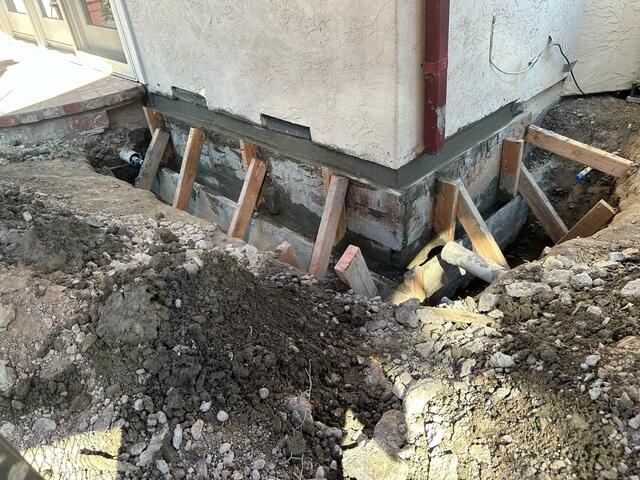
In older raised foundations, the stem wall can crack or deteriorate over time. We rebuild damaged sections by removing failing concrete, replacing or reinforcing rebar, and pouring new concrete. Larger cases may call for sectional perimeter foundation replacement.
Hands-On Expertise in Foundation Stabilization and Concrete Repair
Our crews handle the full range of work a Central Valley home can need, from precision slab lifting to rebuilding sections of a perimeter foundation. Each project starts with what the inspection found, and the method follows the cause. These documented projects show what that looks like in practice.
Slab Foundation Stabilization in Fresno, CA
A Fresno homeowner found cracking across a section of their slab foundation, caused by settlement beneath the slab. We X-ray scanned the slab to locate rebar and post-tension cables, then injected PolyLevel® foam through a grid of small ports to fill voids and lift the slab. The cracks were ground out and sealed with SealBoss polymer. The project shows how an interior slab can be stabilized without tearing it out. Read the Fresno slab foundation case study.
Driveway and Walkway Leveling in Stockton, CA
A Stockton homeowner had a driveway and front walkway with spreading cracks, sunken sections, and trip hazards, made worse by water getting under the slabs. Rather than replace the concrete, we lifted and leveled it with PolyLevel® and sealed the joints with NexusPro® silicone sealant. It shows how concrete leveling plus joint sealing can restore a safe surface and slow future water intrusion. Read the Stockton driveway case study.
Stem Wall and Perimeter Foundation Replacement in Tracy, CA
In Tracy, a home had uneven floors, wall cracks, detaching brickwork, and a deteriorating stem wall with failing concrete and rebar. We replaced corroded rebar with synthetic fiberglass rebar, rebuilt and reinforced cracked areas with high-strength concrete and a carbon fiber patch system, and removed and repoured damaged sections of the perimeter foundation with a new mudsill and anchor bolts. It shows the structural work involved when deterioration goes beyond crack repair. Read the Tracy foundation case study.
Noticing similar signs at your home? Call 925-961-9012 to schedule a free inspection.
Why Fresno Homeowners Choose Foundation Repair of CA
Choosing a foundation contractor comes down to experience and qualifications, and to finding a team that understands how soil, water, and construction affect a foundation. Since 2012, we’ve provided:
- Upfront pricing. You’ll know what your project costs before any work begins.
- One team, start to finish. Repair plans are designed and stamped by our engineering partners. We pull permits, coordinate inspections, and act as your single point of contact.
- Our own certified crews. The technicians who install your repair are trained, certified, and employed directly by us.
- Foundation Supportworks® systems. We install tested pier, crawl space, and concrete products.
- Transferable warranties at no extra cost. Coverage depends on the product installed (see below).
- Financing options. Financing is available through our lending partners.
- BBB A+ rating and California Contractor License #1159325.
What Affects the Cost of Your Repair
We don’t publish a citywide price because the number depends on your home. Your consultant will walk you through each factor:
- Extent of the damage: hairline cracks call for a very different scope than active settlement
- Foundation type: slab, crawl space, and pier-and-beam foundations use different methods
- Repair method: piers, PolyLevel®, crawl space supports, and wall systems carry different material and labor costs
- Site access: tight side yards, landscaping, pools, and nearby structures affect labor time
- Engineering and permits: requirements vary by jurisdiction, including City of Fresno versus Fresno County
- System and warranty selected: the product chosen affects material cost